Short answer: A little, but less than most people think. Under the October 2026 price cap, an 8 minute shower on a 9.5kW electric shower costs roughly 33p. Cutting that to 4 minutes saves about 17p a shower. Shorter showers usually save more than skipping them, and anyone with limited mobility should never cut back on washing to save money.
What a shower costs under the October 2026 price cap
From 1 October to 31 December 2026, Ofgem's price cap sets the typical dual fuel bill paid by direct debit at £1,723 a year, up 4% on the previous quarter. The unit rates that matter for showering are:
- Electricity: 26.32p per kWh, with a standing charge of 54.83p a day. VAT has been removed from electricity bills from 1 October 2026 to 31 March 2027, so this rate does not include VAT.
- Gas: 7.97p per kWh including 5% VAT, with a standing charge of 29.68p a day.
The standing charges are paid every day whether you shower or not, so the only part of the bill you can change by showering differently is the unit cost.
The sum for an electric shower
An electric shower heats water as it flows, using its full power rating while it runs on a normal heat setting. That makes the sum straightforward:
- Convert the minutes into hours: 8 minutes is 8 divided by 60, which is about 0.133 hours.
- Multiply by the shower's power: 9.5kW multiplied by 0.133 hours is about 1.27kWh.
- Multiply by the unit rate: 1.27kWh multiplied by 26.32p is about 33p.
So one 8 minute shower on a 9.5kW electric shower costs roughly 33p in electricity. A 4 minute shower uses about 0.63kWh, which is roughly 17p. These are estimates. Your own figure depends on your shower's rating, the heat setting you use, how cold the incoming water is (colder in a Scottish winter) and your tariff.
Costs for common shower ratings
Electric showers are often sold at around 8.5kW, 9.5kW or 10.5kW. Using the same method and the October 2026 electricity rate of 26.32p per kWh:
| Shower rating | 4 minutes | 6 minutes | 8 minutes | 10 minutes |
|---|---|---|---|---|
| 8.5kW | about 15p | about 22p | about 30p | about 37p |
| 9.5kW | about 17p | about 25p | about 33p | about 42p |
| 10.5kW | about 18p | about 28p | about 37p | about 46p |
You will usually find the rating printed on the shower unit, on a label inside the cover or in the instruction booklet.
What about gas heated showers?
If your shower is fed by a combi boiler or a hot water cylinder heated by gas, each kWh of heat is cheaper. At 7.97p, gas costs roughly a third of the 26.32p electricity rate per kWh. Boilers lose some heat, and mixer showers often run at a higher flow than electric showers, so the gap narrows, but gas heated showers usually cost less per minute than electric ones. Because flow rates and boiler efficiency vary so much from home to home, it is hard to give one reliable figure, so treat the electric example as a guide to the upper end.
Fewer showers or shorter showers?
Here is how the numbers work out over a year for someone using a 9.5kW electric shower:
| Routine | Working | Rough cost a year |
|---|---|---|
| 8 minutes, every day | 365 showers x 33.3p | about £122 |
| 8 minutes, 4 days a week | 208 showers x 33.3p | about £69 |
| 6 minutes, every day | 365 showers x 25p | about £91 |
| 4 minutes, every day | 365 showers x 16.7p | about £61 |
Showering 4 days a week instead of 7 saves about £52 a year. Simply showering for 4 minutes instead of 8, every day, saves slightly more (about £61) and you still get a daily wash. Even trimming 2 minutes off each shower saves around £30 a year.
For most households, then, the answer is not to stop showering but to spend less time with the water running. Turning the shower off while you shampoo, or having the water at a comfortable warm temperature rather than very hot, helps too.
Water charges in Scotland
In much of England and Wales, people on a water meter also save on water and sewerage when they shower less. In Scotland, most households pay water and sewerage charges through their council tax rather than a meter, so the saving here is mainly on energy.
Other ways to cut the cost of showering
Choose the right shower head
Water-saving and aerated shower heads make the most difference on mixer and power showers, where less hot water flowing means less energy used. On an electric shower, energy use is set mostly by the power rating and the minutes it runs, so time matters more than the head. A good handheld head on a riser rail can still make showering quicker and easier, which saves time in itself.
Use a thermostatic control
A thermostatic shower holds the temperature steady even if someone runs a tap elsewhere in the house. That means less time spent adjusting the water before you step in, and much less risk of a sudden blast of hot or cold water. For older people and anyone with reduced sensation in their skin, this is a safety feature as much as a saving.
Look at the age of the shower
An old shower with a weak, uneven flow tends to make showers longer, not shorter, because it takes longer to rinse off. If yours is due for replacement anyway, a modern unit with clear, easy to grip controls is worth considering. Our guide on the best time to renovate your bathroom covers how to plan this sensibly.
Get help if bills are a worry
If you are struggling to pay your energy bills, talk to your supplier about a payment plan, or speak to a free advice service such as Citizens Advice Scotland. Cutting back on washing should not be the first place to look.
Why people with limited mobility should not cut back on washing
Saving 17p a shower is not worth it if it puts someone's health at risk. For older people, disabled people and anyone with continence needs, regular washing matters for skin health and comfort.
- There is no single rule for how often to shower. A daily wash of the face, hands, armpits, groin and feet (a strip wash) keeps people clean and protects skin. A full shower or bath a few times a week suits many older people.
- More frequent showers may be needed where there is incontinence, heavy sweating, or where a care plan says so.
- Older skin dries out more easily, so lukewarm water, gentle soap substitutes, patting dry and moisturising all help. Washing is also a good chance to check for any signs of pressure damage.
We look at this in more detail in how often a disabled person should shower. If you are unsure what is right for you or the person you care for, please check with a GP, district nurse or occupational therapist (OT).
Make showering easier, not rarer
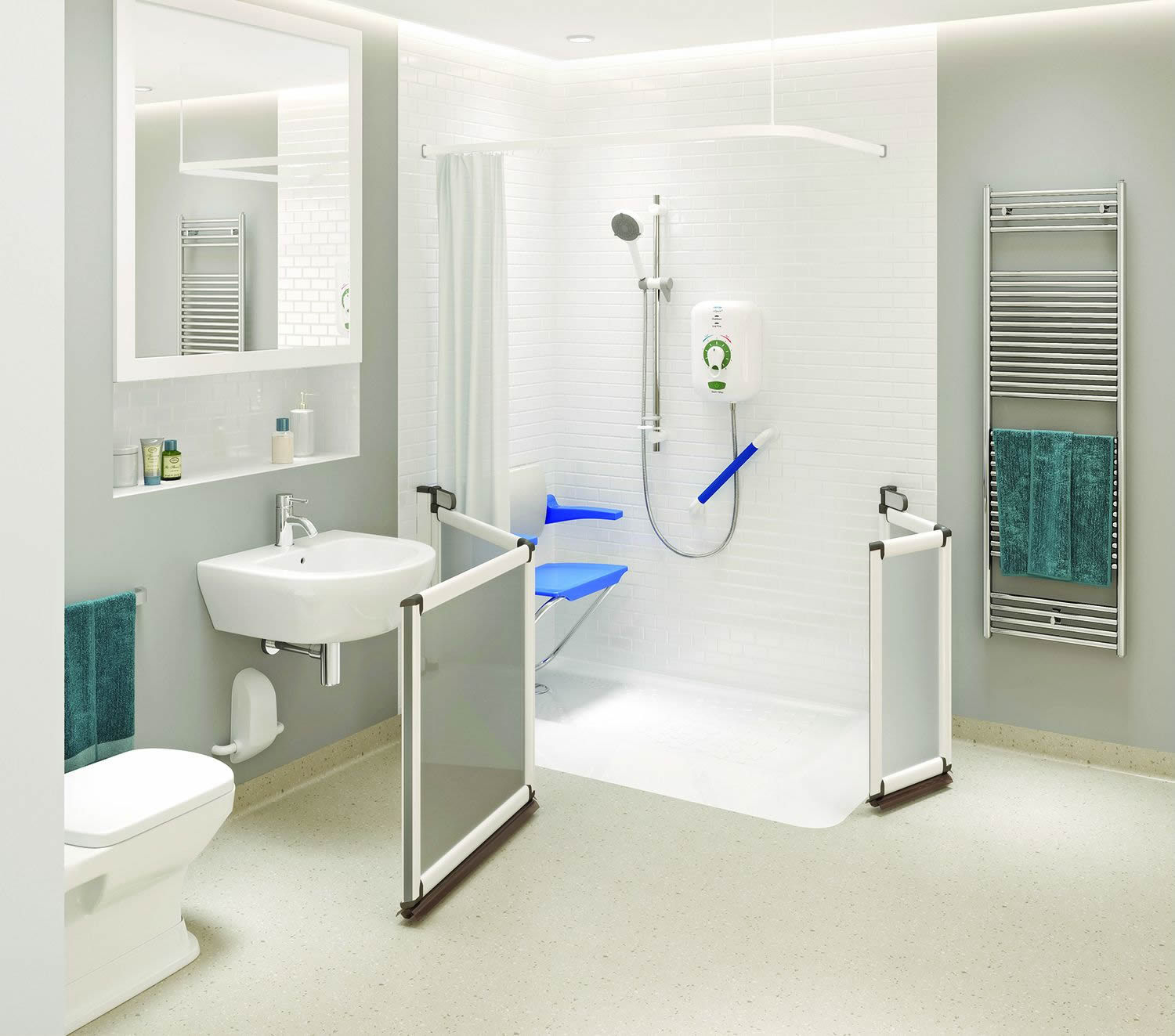
Many people shower less often not because of cost but because showering is tiring, frightening or simply too hard. Stepping over a bath, standing for several minutes or fiddling with stiff controls all take energy. The better fix is a shower that is easier and safer to use: a level floor, a fold-down seat, grab rails, a thermostatic control and a handheld head. Our guide to showering with limited mobility has practical tips, and our mobility showers page explains the options we install.
A shower you can use sitting down, with controls in easy reach, also tends to be quicker. That brings the running cost down without anyone having to go without.
Is your shower making washing harder than it should be? Our own team designs and fits mobility showers across Scotland, starting with a free 3D design and a no-obligation quote. Request your free design.
Frequently asked questions
How much does a 10 minute electric shower cost in October 2026?
On a 9.5kW electric shower, 10 minutes uses about 1.58kWh. At the October 2026 price cap rate of 26.32p per kWh, that is roughly 42p. This is an estimate and depends on your shower and tariff.
Is it cheaper to have a bath or a shower?
A short shower usually uses less hot water than a full bath, so it normally costs less. A long shower on a powerful setting can cost as much as a bath, so the time you spend under the water is the deciding factor.
Will the price cap change in January 2027?
Ofgem reviews the cap every three months, so the unit rates in this article apply from 1 October to 31 December 2026. To work out your own cost later, multiply your shower's kW rating by the minutes divided by 60, then by your current unit rate.
Does a thermostatic shower use less energy?
Not directly, but it keeps the temperature steady, so you waste less time adjusting the water and are less likely to run it very hot. It also reduces the risk of scalding, which is important for older people and children.