Short answer: Choose a fitter who visits and measures before quoting, gives a written itemised price, shows proof of insurance, uses properly registered trades for plumbing, gas and electrics, and offers a written guarantee. Ask who will actually do the work and check recent reviews and references. If the bathroom is for an older or disabled person, look for real mobility experience.
Why the choice of fitter matters so much
A bathroom packs plumbing, drainage, electrics, waterproofing, joinery and tiling into one small room. If any one of those is done badly, the problems often stay hidden until a leak shows on the ceiling below or tiles start to lift. A good fitter gets the parts you cannot see right, as well as the parts you can.
The checklist below works for any bathroom, from a simple refresh to a full wet room. Keep it beside you when you speak to companies and compare quotes.
Checklist part 1: Qualifications and memberships
Different parts of a bathroom job need different qualifications. Ask which apply to your project and check them yourself where you can.
| Type of work | What to look for |
|---|---|
| Plumbing | Membership of SNIPEF (Scottish and Northern Ireland Plumbing Employers' Federation) or WaterSafe approval |
| Any gas work, such as moving a boiler or gas pipe | Gas Safe registration, which is a legal requirement for gas work |
| Electrics | SELECT or NICEIC registration in Scotland, with work to BS 7671 |
| Structural changes | Experience of building warrant applications where one is needed |
A registered business can usually be found on the relevant body's online register. If a company says it is registered but cannot give you a name or number to check, treat that with caution.
Checklist part 2: Insurance, quotes and paperwork
Insurance
Ask for proof of public liability insurance. If something is damaged in your home during the work, this is what protects you.
A written, itemised quote
A good fitter will visit, measure and look at the existing pipework and floor before giving a price. The quote should list:
- the products to be supplied, ideally with brand and model names;
- each part of the work, including removal of the old suite, waste disposal, plumbing, electrics, tiling or panelling, flooring and making good;
- what is not included, so there are no surprises;
- whether the price is fixed or based on day rates;
- the expected start date and how long the job will take;
- the payment schedule and deposit.
If you are trying to make sense of labour costs, our guide to how much plumbers charge for fitting a bathroom explains typical day rates and what a fixed price should cover.
Guarantees
Ask what guarantee is given on the workmanship and on the products, how long each lasts and what it covers. Get it in writing. Manufacturer warranties on showers and valves sometimes depend on the product being fitted by a competent installer, so keep your paperwork.
Building warrant and permissions
In Scotland, replacing a bathroom in a one or two storey house usually does not need a building warrant, although the work must still meet the building regulations. Work that involves a loadbearing wall, an extension, a change to how wastewater is discharged, or a house with three or more storeys generally does. A good fitter will tell you if your project needs one and help you check with the council's building standards team.
Checklist part 3: Who will actually do the work?
This question is often missed. Some companies sell and design the bathroom, then pass the installation to subcontractors. Others use their own employed team for every trade. Both can work, but you should know which you are getting.
- Ask who will be in your home and whether they are employed by the company.
- Ask who manages the job day to day and who you speak to if there is a problem.
- Ask how trades are scheduled. When one team covers plumbing, electrics, joinery, flooring and waste removal, there is less waiting between stages, and many jobs finish sooner.
At Mobility Bathrooms Glasgow, our own team handles plumbing, electrics, joinery, flooring and waste removal, with no subcontractors. We are a family-run business and a subsidiary of our parent company, My Beautiful Bathroom.
Checklist part 4: Reputation and references
Recommendations from friends, family and neighbours are still one of the best ways to find a fitter. If someone you know had a bathroom fitted a year or more ago, they can also tell you how it has held up.
- Read recent Google reviews and notice how the company responds to any criticism.
- Ask to see photos of similar jobs, ideally with a mix of before and after shots.
- Ask for references from recent customers and, if possible, speak to one.
- Check how long the business has been trading and where it is based.
Be wary of companies that only take cash, push you to sign on the day, or want a large deposit before any materials are ordered. Our guide on finding an affordable bathroom fitter in Scotland has more red flags and tips on comparing prices.
Checklist part 5: Mobility and accessibility expertise
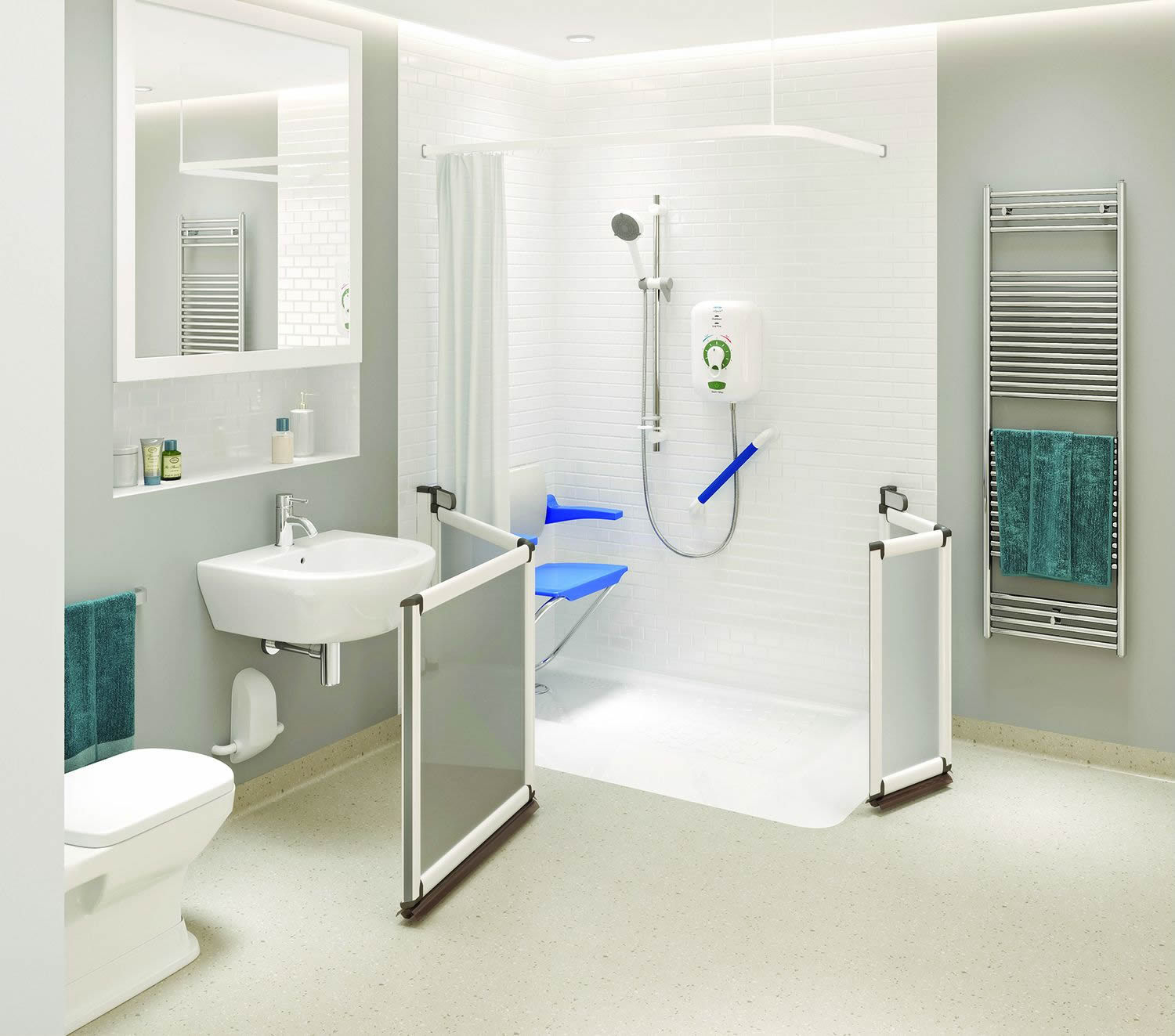
If the bathroom is for an older person, a disabled person or someone recovering from illness, general bathroom experience is not always enough. A level access shower needs a correctly laid fall to the drain so water does not run back into the room. Grab rails must be fixed into solid wall or proper reinforcement so they can take a person's weight. Seat and toilet heights, door widths and the space needed for a wheelchair or carer all need planning.
Questions to ask a fitter about mobility work:
- Have you installed wet rooms, level access showers or walk-in baths before?
- Do you work to NHS and Occupational Health standards?
- Can you work from an occupational therapist's report or recommendations?
- Do you understand the VAT relief rules for disabled people and the 5% rate for people aged 60 or over on certain items?
- Can you show me a design before work starts?
If you are applying for help through your council's Scheme of Assistance, the council will usually want to see that the proposed work matches what the OT assessed. A fitter used to this process can save you time. You can see examples of the accessible work we carry out on our disabled bathrooms page.
Plan before you choose
The better you understand what you want, the easier it is to judge whether a fitter understands it too. Decide whether you need a bath, a shower or both, what you want to store, and whether the room needs to work for you in ten years as well as today. Our checklist on what to look for before a full bathroom remodel walks through those decisions step by step.
Want a fitter who handles every trade and understands mobility needs? We offer a free 3D design and a no-obligation quote, so you know exactly what you are getting before you commit. Request your free design.
Frequently asked questions
Should a bathroom fitter visit before giving a quote?
Yes. A fitter needs to measure the room and see the existing pipework, floor and walls to give an accurate price. A quote given without a visit is likely to change once work starts.
What qualifications should a bathroom fitter have in Scotland?
Look for SNIPEF or WaterSafe for plumbing, SELECT or NICEIC for electrics, and Gas Safe registration for any gas work. The company should also hold public liability insurance and offer a written guarantee.
Is it better to use one company for everything?
Often, yes. One company covering every trade means one point of contact, one schedule and one party responsible for the finished job. If you hire trades separately, you will need to coordinate them yourself.
How do I know a fitter understands accessible bathrooms?
Ask to see similar jobs, check whether they work to NHS and Occupational Health standards, and ask how they fix grab rails and form a level access shower floor. A specialist should answer clearly and confidently.